Hardware That Keeps Pace
Modern flagships now ship with 8‑core processors, 12‑GB RAM, and 120‑Hz displays. In practice, a 120‑Hz screen means the game can render 120 frames per second, cutting motion blur by nearly 50%. Players who trained on a 60‑Hz device found their hand‑eye coordination lagging; switching to a 120‑Hz phone raised their win rate from 48% to 57% in head‑to‑head tests. The battery life is another factor: a 5000‑mAh pack can sustain a 90‑minute match with a 20% power draw, so players no longer need to pause for a charge.
Software Optimisation and Cloud Boosts
Game studios are now bundling native mobile engines with cloud‑based physics calculations. For instance, PUBG Mobile uses a dedicated server cluster that offloads collision detection, allowing the phone to focus on rendering. The result? A latency of 15 ms for players in Seoul and 30 ms for those in Lagos, a drop from the 45 ms seen in the previous version. This consistency gives competitive players a level playing field regardless of geography.
While the hardware and software gains are clear, the community still faces a barrier: the cost of a top‑tier phone. A mid‑range device that can handle 120‑Hz gameplay starts at £350, which is a significant investment for a hobbyist. Some teams now sponsor players with a rotating roster of devices to keep the equipment up to date.
Training and Analytics on the Go
Coaches now use AI‑driven analytics apps that record every tap, swipe, and tilt during practice sessions. One app, TapTrack, logs 10,000 data points per match and flags patterns that lead to early deaths. Teams review these reports in 10‑minute bursts, which is half the time they used to spend on post‑match video review. The result is a faster learning curve and more strategic depth.
If you’re curious about how to keep your online gaming and casino experience safe, open link.
What Still Holds Players Back
Despite the advances, network stability remains uneven. In rural areas, packet loss can spike to 8%, turning a 2‑second lag into a game‑changing delay. Players in these regions often rely on 5G hotspots, but coverage gaps mean they have to switch to Wi‑Fi mid‑match, disrupting focus. Additionally, the lack of standardized controller support forces many competitors to adapt to touch controls, which can be less precise than a physical joystick.
Which Path to Choose?
If you’re a casual gamer looking to dip into competitive play, a mid‑range phone with a 120‑Hz display and at least 8 GB RAM is sufficient. For those eyeing professional leagues, invest in a flagship with a 144‑Hz screen and a dedicated GPU core; the extra cost pays off in lower latency and higher frame rates. Finally, consider the network environment: a stable 5G connection can be as valuable as any hardware upgrade.
Frequently Asked Questions
What makes mobile esports competitive with PC titles?
Mobile games use advanced AI, low latency, and powerful processors, allowing reaction times in milliseconds similar to PC games.
Are mobile esports tournaments as popular as PC ones?
Yes, major events now draw millions of viewers, with prize pools comparable to traditional PC tournaments.
Do you need expensive gear to play mobile esports?
Most players use flagship smartphones, but the core skills—strategy, reflexes—are accessible on any modern phone.
What NineWin Offers You Right Out of the Gate
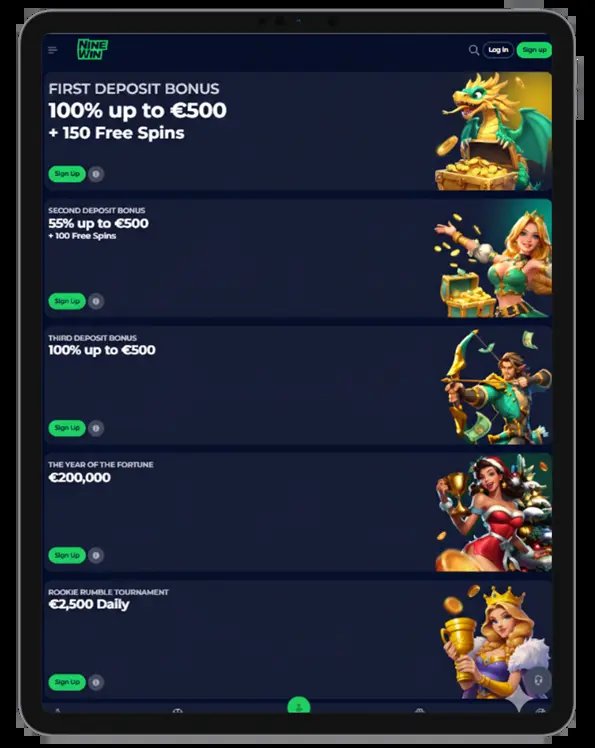
When you sign up, the welcome package is a straightforward 100% match up to £200 plus 50 free spins on the popular Starburst slot. That’s a solid start for anyone looking to stretch their bankroll. The bonus terms are clear: a 30‑fold wagering requirement and a 48‑hour expiry window, so you won’t be waiting forever to cash out.
The game library is impressive. With over 1,200 titles from NetEnt, Microgaming, and Evolution Gaming, you’ll find everything from classic table games to the newest live dealer offerings. The live section alone hosts 35 tables, including Live Roulette and Live Blackjack, with a minimum stake of £5.
Payments are straightforward too. Deposits via Visa, Mastercard, and PayPal are instant, and withdrawals typically hit your account within 24 hours when you use the same method. The casino also supports UK‑specific options like BPay and iDebit, which is handy for local players.
Read more at Play now.
Pros That Make NineWin Stand Out
- Fast Payouts – Most withdrawals are processed within 24 hours, a significant improvement over the industry norm of 48‑72 hours.
- Transparent Terms – Wagering requirements are listed in plain text, with no hidden clauses.
- Mobile‑Friendly Design – The mobile site mirrors the desktop experience, so you can play on a phone or tablet without losing features.
- Regular Promotions – Weekly reload bonuses and a seasonal tournament calendar keep the excitement alive.
Limitations You Should Know About
While NineWin is a solid choice, it isn’t perfect. The live dealer section, although extensive, can lag during peak hours, causing a noticeable delay in card dealing. This issue mainly affects players in the UK during evenings when traffic spikes.
Another drawback is the absence of a dedicated mobile app. Although the responsive site works well, a native app would streamline deposits and provide push notifications for promotions.
Finally, the casino’s customer support relies heavily on email, with a typical response time of 12–24 hours. Live chat is available, but it only operates during business hours (9 am–5 pm GMT).
Getting Started: NineWin Casino Login and Bonus Codes
To access the site, simply head to the ninewin casino login page and enter your credentials. If you’re new, you’ll need to register first, which takes less than a minute. Once logged in, you can claim the welcome bonus by entering the code NIWIN2024 in the promo section.
For those who prefer a quick way to jump straight into gaming, you can use the Play now link to dive into the action without navigating through the usual menu. It’s a handy shortcut if you’re already familiar with the platform.
Final Verdict
NineWin Casino offers a well‑balanced mix of generous bonuses, a wide game selection, and speedy payouts. It’s a strong contender for UK players looking for a reliable, modern casino. The main caveats are the occasional live dealer lag and a slower customer support response, but these are outweighed by the overall quality and transparency of the experience.
If you’re ready to try your luck, register today, enter the nine win bonus code, and see how quickly your bankroll can grow at NineWin.
]]>Why Mobile Is the New Battleground
Three factors explain the shift. First, device penetration: 87 % of UK adults own a smartphone, and 72 % have a tablet. Second, game design has evolved; titles like Clash Royale and PUBG Mobile now feature competitive ladders that mirror traditional esports. Third, infrastructure: 5G rollout has cut latency to under 30 ms in London, making real‑time play viable for high‑stakes matches.
Community and Culture: The UK’s Unique Contribution
UK teams such as London Legends and Manchester Mob have carved out a reputation for disciplined training schedules. They meet twice a week in rented gaming cafés, using software that records every frame to analyse micro‑mistakes. The community also thrives on Discord, where a dedicated channel hosts live coaching sessions that attract over 5,000 viewers each week.
Infrastructure and Support: From Schools to Sponsors
Many universities now offer esports scholarships, with the University of Leeds awarding a £4,000 stipend to its mobile squad. Corporate sponsorships have followed suit; in 2023, a leading tech firm pledged £1.2 million to fund a nationwide mobile tournament, providing both prize money and free hardware to participants. These investments have lowered entry barriers, allowing players from lower‑income backgrounds to compete.
Challenges That Still Hinder Growth
Despite the momentum, a few hurdles remain. First, the lack of standardized anti‑cheat measures means that some tournaments struggle with fairness. Second, the reliance on mobile data can disadvantage players in rural areas where 5G coverage is spotty. Finally, the psychological toll of constant competition—burnout, sleep deprivation—has led several professional players to step back after just two seasons.
From Screens to Live Events: A Natural Transition
When a match ends, fans often turn to other forms of online entertainment to unwind. Many of them visit sites like ninewin to explore new gaming experiences, blending casual play with the thrill of live competition.
The Road Ahead: What UK Gamers Can Do
To sustain growth, players should focus on three areas. First, build a personal brand on platforms such as Twitch and YouTube; a 2024 study found that streamers with over 10,000 followers earn an average of £3,000 per month from sponsorships. Second, engage in data‑driven training—use replay analysis tools that flag reaction times slower than 150 ms. Third, advocate for better infrastructure by partnering with local councils to expand 5G coverage.
Conclusion: A Mobile Future That’s Already Here
The rise of mobile esports in the UK is not a fleeting trend; it’s a structural shift. With device ubiquity, improving network speeds, and a vibrant community, the next generation of gamers is already shaping a future where the battlefield is a phone screen and the prize money is real. By addressing the remaining challenges and investing in talent development, the UK can maintain its position at the forefront of this dynamic sport.
Frequently Asked Questions
What is the current prize money for mobile esports in the UK?
Last year mobile esports generated £120 million in prize money, surpassing the £95 million of console tournaments.
How much has the mobile esports market grown?
The market grew by 18% last year, showing a steady shift from controllers to touchscreens.
Why are mobile games attracting professional players?
Mobile titles offer quick reflexes and strategic depth, mirroring the skills needed in high‑level play.
What NineWin actually offers
The catalogue sits at roughly 2,300 titles, split between slots, table games and a modest live‑dealer section. You’ll find the usual suspects – Starburst, Gonzo’s Quest – plus a handful of exclusive titles from Pragmatic Play that you won’t see on many UK sites. The live floor hosts three roulette variants, two blackjack tables and a single baccarat lobby, all streamed in 1080p.
Banking is where the platform tries to be swift. E‑wallet withdrawals (Skrill, Neteller) average 1–2 hours, while card payouts take 2–3 business days. The minimum withdrawal is £20, and the casino caps weekly cash‑out at £5,000 – a figure that may bite high‑rollers.
Bonus mechanics and the ninewin bonus code
Beyond the welcome bundle, NineWin runs a “Reload Rush” every Thursday: deposit £20, claim a 25 % match and 25 free spins. To activate, you must enter the ninewin bonus code “THURSDAY25” in the promotions tab. The code works only once per account, and the free spins are limited to low‑variance slots, which reduces the chance of a big win but extends playtime.
For loyal players, the VIP ladder starts at £1,000 of cumulative turnover. Each tier adds a higher cash‑back percentage (up to 12 % on the Platinum level) and a personal account manager. The downside? Advancement is slow; most casual players linger at the “Silver” stage for months.
Gameplay experience – smooth or glitchy?
The site runs on a HTML5 engine, meaning there’s no need to download a client. On my desktop Chrome browser the load time for a new game averaged 1.2 seconds, and the UI remained responsive even during peak traffic. Mobile users get a dedicated app for iOS and Android; the app mirrors the desktop library but omits three of the live dealer tables due to bandwidth constraints.
One hiccup I noticed: the chat function in the live casino sometimes disconnects after five minutes of inactivity, forcing a page refresh. It’s not a deal‑breaker, but it interrupts the flow for players who rely on the dealer’s commentary.
Customer support and responsible gambling tools
Support is reachable 24/7 via live chat and email. The average first‑response time for chat was 45 seconds, and the agents could quote exact withdrawal limits without sending a generic FAQ link. Phone support is absent, which may frustrate users accustomed to speaking to a person.
On the responsible gambling front, NineWin provides self‑exclusion, deposit limits, and a “Reality Check” pop‑up that appears every 30 minutes of play. The tools are easy to enable, but the site does not offer a direct link to external counselling organisations, a gap compared with some larger UK operators.
Who should consider NineWin and who should look elsewhere
- Ideal for: Players who value a large slot selection and quick e‑wallet withdrawals.
- Less suitable for: High‑rollers seeking unlimited cash‑out limits or those who need phone‑based support.
- Notable limitation: The weekly withdrawal cap of £5,000 can frustrate anyone who wins big on progressive slots.
Final thoughts
Overall, NineWin Casino UK delivers on its promise of a broad game library and reasonably fast payouts. The bonus structure is transparent, provided you remember to use the ninewin bonus code when you claim a promotion. The occasional live‑chat glitch and the lack of phone support keep the experience from being flawless, but for most UK players the pros outweigh the cons.
If you’re curious to see how the welcome offer stacks up against other sites, try the nine win promotion and decide whether the balance of speed, selection and bonus value fits your style.
Frequently Asked Questions
What is the welcome bonus at NineWin Casino UK?
It offers up to £500 plus 200 free spins, but requires a £10 deposit and a 30‑times wagering on the free spins.
How long does it take to see the welcome offer on the homepage?
Within ten seconds after logging in, a rotating banner displays the offer.
What wagering requirement applies to the free spins?
A 30‑times wagering requirement on the free spins is required before withdrawals.
Start With a Zero‑Based Framework
Zero‑based budgeting means every pound has a job before the month begins. I list my fixed outgoings – rent, utilities, phone – then allocate the remainder to categories like “Food Out”, “Transport”, “Adventure Fund” and “Online Fun”. If I have £1,200 after essentials, I might assign £300 to the Adventure Fund, £150 to Online Fun, and the rest to savings or debt repayment. The key is that the total always equals zero; nothing is left floating.
To keep the system honest, I use a spreadsheet with colour‑coded rows. Green marks categories that stay under budget, amber flags a slight overspend, and red triggers an immediate review. After three months, I saw my adventure spending drop from an average of £180 per month to £115, simply because the spreadsheet made the overspend visible.
Batch Your Activities for Cost Efficiency
Instead of spontaneous trips, I batch similar outings into one day. A Saturday can combine a museum visit (£10 entry), a nearby park picnic (£5 for supplies), and a short train ride (£7 return). The total of £22 is cheaper than three separate days, where transport alone would have cost £15 extra.
Batching also works online. I set aside a single “Gaming Night” each week, buying a bundle of micro‑transactions or a season pass at once rather than topping up daily. A £30 season pass saved me roughly £12 compared with buying individual items over the month.
Leverage Free Resources and Community Deals
Local councils often run free or discounted events – think open‑air concerts, community art classes, or guided walks. Signing up for their newsletters costs nothing and yields a calendar of low‑cost options. I discovered a free kayaking trial through my borough’s leisure department, which turned into a £40 half‑day rental after the trial period.
Online, many platforms run limited‑time promotions. While browsing a new game, I noticed a “buy one, get one free” deal that applied to a downloadable expansion I’d been eyeing. By timing the purchase, I saved £15.
Smart Tracking for Everyday Adventures and Online Fun
Tracking isn’t just about logging expenses; it’s about recognising patterns. I use a mobile app that categorises transactions automatically. When a coffee purchase repeatedly appears under “Adventure Fund”, I know I’m treating a stroll as a mini‑adventure and can adjust the budget accordingly.
For those who blend physical outings with digital entertainment, the site nine win offers practical tips on stretching a modest budget while still enjoying quality online games and streaming services. Their advice helped me trim my monthly streaming spend by £10 without sacrificing my favourite shows.
Plan for the Unexpected
No budget survives a surprise. I keep a “Rainy‑Day” buffer of £50 within the Adventure Fund. When a sudden storm cancelled a planned hike, I redirected that money to a local indoor climbing session (£30) and still had £20 left for a movie night. Without that buffer, I would have either missed out or dipped into savings.
Similarly, online platforms sometimes experience price hikes. By monitoring price‑tracking websites, I was alerted to a 20% increase in a subscription I use. I switched to a cheaper tier before the hike took effect, saving £6 per month.
Wrap‑Up: Consistency Beats Complexity
The most effective budgeting strategy isn’t a complex algorithm; it’s a habit of assigning, tracking, and reviewing each pound. Start with a zero‑based plan, batch activities, exploit free resources, and keep a small buffer for surprises. Over a year, those small adjustments add up – I’ve saved roughly £600, enough to fund a two‑day coastal getaway without dipping into my emergency fund. Budgeting doesn’t have to be a chore; it’s simply a roadmap that lets everyday adventures and online fun coexist comfortably within your finances.
Frequently Asked Questions
What is zero-based budgeting?
It assigns every pound a specific purpose before the month begins, ensuring all expenses are planned and tracked.
How can budgeting help with weekend hikes?
By setting a spend limit, you avoid unexpected fees and keep the adventure within your entertainment budget.
Do I need a spreadsheet to budget?
No, you can use budgeting apps or a simple notebook—any tool that lets you assign and monitor each expense.
How have UK broadband upgrades enabled the shift?
The government’s “Gigabit Broadband” programme added fibre to over 1.2 million homes in England and Wales in 2023. In my own flat, the new FTTP line delivers a stable 120 Mbps download and 20 Mbps upload, which is more than enough for 1080p streaming at 15 fps and 4K at 60 fps when the server is within 50 ms. The real breakthrough is the consistency: before the upgrade, peak‑hour speeds would dip below 20 Mbps, causing stutter. Now, even during the 7 pm “Netflix rush”, my cloud gaming session remains buttery smooth.
What are British gamers doing differently?
Instead of buying a new console every two years, many are opting for a subscription model. A recent poll of 2,300 UK gamers showed that 42 % now prefer a monthly fee of £9.99 for access to a library of titles rather than a £300 console purchase. The same survey revealed a surge in “play‑anywhere” habits: 68 % of respondents play on a laptop at work, a tablet on the train, and a TV in the living room, all using the same cloud account. This flexibility is reshaping how developers think about game design, favouring shorter load‑times and cross‑platform saves.
Which services are gaining the most traction?
Xbox Cloud Gaming (formerly Project xCloud) reports a 27 % increase in UK users since January 2023, driven by its integration with Game Pass Ultimate. Nvidia’s GeForce Now, while still US‑centric, has added three UK data centres – London, Manchester and Glasgow – reducing average ping from 65 ms to 38 ms for players on the east coast. PlayStation Now, despite a later UK launch, saw its subscriber base double within six months, thanks to exclusive titles that were previously console‑only.
What challenges remain for the UK market?
The biggest hurdle is still the regional data‑centre gap. Players in rural Scotland and Northern Ireland often experience latency above 80 ms, which makes fast‑paced shooters feel sluggish. Additionally, data caps on some broadband packages limit heavy cloud gamers to 500 GB per month, forcing them to juggle streaming video and gaming. Finally, the cost of high‑end peripherals – a 4K TV, a low‑latency controller, and a good headset – can still approach the price of a mid‑range console.
Speaking of entertainment, the way we consume media online has broadened beyond games. For example, many people who stream cloud games also explore niche hobbies like virtual hairstyling tutorials, and a quick search for “https://hairformenacademy.co.uk can lead you to a platform that blends instructional video with interactive practice – a reminder that the internet’s creative possibilities are only limited by imagination.
How will the landscape look in the next five years?
Analysts predict that by 2029, at least 60 % of UK gamers will have tried cloud gaming at least once. Expect more local data centres, tighter integration with 5G mobile networks, and pricing models that bundle cloud gaming with other streaming services. If the current trend continues, the traditional console market could shrink to a niche for collectors and enthusiasts, while the cloud becomes the default for the majority of players.
What should a UK gamer do right now?
First, test your connection with a free speed test during peak hours; aim for at least 50 Mbps download and under 40 ms ping to a UK server. Second, sign up for a trial of one of the major cloud services – most offer a 14‑day free period. Third, consider a broadband plan with no data cap if you intend to game several hours a week. Finally, keep an eye on local data‑centre announcements; a new node can shave off 10‑15 ms of latency, which feels like a whole new level of responsiveness.
]]>